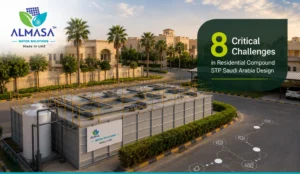


8 Critical Challenges in Residential Compound STP Saudi Arabia Design
Saudi Arabia continues to witness rapid growth in residential communities, gated compounds, staff accommodation developments, and mixed-use housing projects. As developers focus on creating sustainable and high-quality living environments, wastewater treatment infrastructure has become an essential component of project planning.
A properly designed residential compound STP Saudi Arabia solution helps ensure environmental compliance, reliable operation, water reuse opportunities, and long-term cost efficiency.
However, many residential developments face challenges when designing and implementing sewage treatment systems. Poor planning can result in operational issues, odor complaints, increased maintenance costs, and expensive future upgrades.
This article explores the most common design challenges developers face and how they can select the right wastewater treatment solution for long-term success.
Why Residential Compounds Need Dedicated STP Systems
Modern residential compounds generate significant volumes of domestic wastewater every day from:
- Villas
- Apartments
- Clubhouses
- Community facilities
- Recreational areas
- Commercial outlets within the compound
Without proper treatment, wastewater can impact:
- Environmental compliance
- Community hygiene
- Property value
- Resident satisfaction
A dedicated sewage treatment plant ensures wastewater is effectively treated and managed while supporting sustainable community development.
Challenge #1: Accurately Estimating Wastewater Flow
One of the most common mistakes during project planning is inaccurate wastewater flow estimation.
Designers must consider:
- Number of residential units
- Occupancy rates
- Water consumption patterns
- Future expansion phases
- Peak usage periods
Underestimating flow can overload the system, while overestimating flow may lead to unnecessary capital expenditure.
Accurate hydraulic calculations are essential for efficient STP design.
Challenge #2: Planning for Future Community Growth
Many residential compounds expand over time.
Additional phases may include:
- New villas
- Additional apartment blocks
- Retail facilities
- Recreational amenities
If future growth is not considered during the design stage, developers may face expensive system upgrades later.
A scalable STP design provides flexibility for future expansion without major disruption.
Challenge #3: Space Limitations Within Residential Developments
Land utilization is a key consideration in modern residential projects.
Developers often seek to maximize:
- Residential areas
- Green spaces
- Parking facilities
- Community amenities
This leaves limited space for wastewater treatment infrastructure.
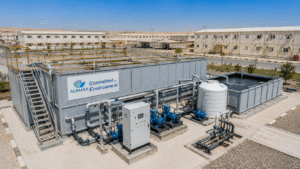
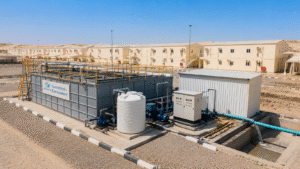
Compact treatment technologies such as MBR systems help reduce footprint requirements while maintaining high treatment efficiency.
Challenge #4: Odor Control Near Residential Areas
Odor management is one of the most important concerns for residential developments.
Residents expect:
- Clean surroundings
- Comfortable living conditions
- Minimal environmental disturbances
Poorly designed sewage treatment systems can generate unpleasant odors that affect resident satisfaction and property reputation.
Effective odor control strategies should include:
- Proper aeration systems
- Efficient sludge handling
- Covered process units where required
- Stable biological treatment processes
Challenge #5: Achieving High Treated Water Quality
Many residential compounds now incorporate:
- Landscaping
- Irrigation systems
- Community gardens
- Recreational green areas
These applications create opportunities for treated wastewater reuse.
To support reuse safely, the STP must consistently produce high-quality effluent.
Advanced treatment technologies can significantly improve treated water quality and enable sustainable water management practices.
Challenge #6: Selecting the Right Treatment Technology
Technology selection directly impacts:
- Capital cost
- Operating cost
- Footprint requirements
- Effluent quality
- Maintenance needs
Common options include:
Conventional Activated Sludge: Suitable for certain applications but typically requires larger footprints.
MBBR Systems: Provide improved biological treatment efficiency with moderate space requirements.
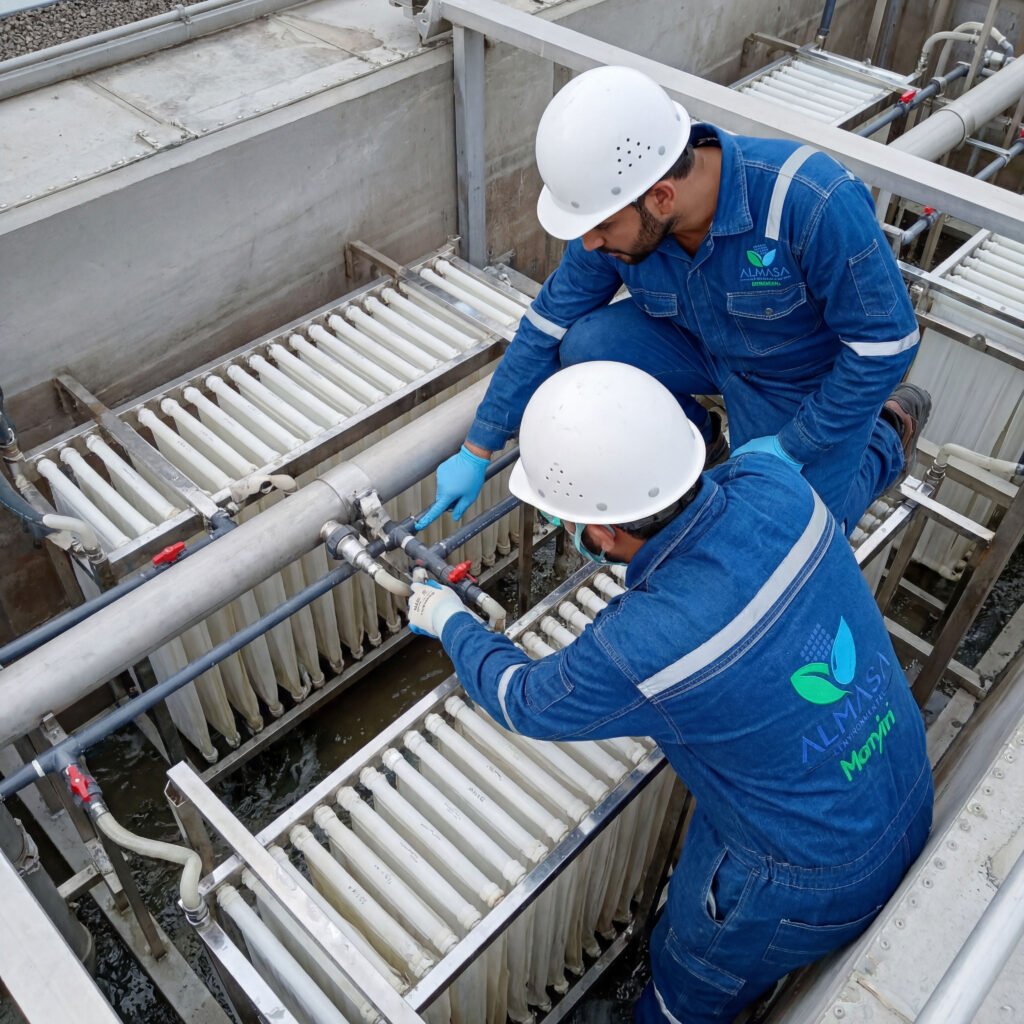
MBR Systems
Offer:
- Superior effluent quality
- Compact footprint
- Enhanced water reuse capability
- Reliable performance
For many modern residential compounds, MBR technology is becoming the preferred choice.
Challenge #7: Long-Term Operation and Maintenance
A sewage treatment plant is a long-term operational asset.
Developers should consider:
- Ease of operation
- Availability of spare parts
- Energy consumption
- Maintenance requirements
- Technical support availability
A system that is difficult to operate can increase long-term ownership costs.
Selecting a reliable technology partner is equally important as selecting the equipment itself.
Challenge #8: Meeting Sustainability Objectives
Sustainability has become a major focus for residential developments across Saudi Arabia.
Developers are increasingly seeking solutions that support:
- Water conservation
- Environmental responsibility
- Resource efficiency
- Long-term operational savings
Wastewater treatment and water reuse systems contribute significantly to achieving these goals while supporting Saudi Arabia’s broader sustainability initiatives.
Why MBR Technology Is Ideal for Residential Compounds
Many developers are choosing MBR technology because it addresses several common residential wastewater treatment challenges.
Key benefits include:
- Compact installation footprint
- High treated water quality
- Reduced odor generation
- Reliable operation
- Water reuse capability
- Support for sustainable community development
These advantages make MBR systems particularly suitable for modern residential compounds where space and environmental performance are important considerations.
Common Applications
Residential compound STPs are widely used in:
Gated Villa Communities: Providing centralized wastewater treatment for residential neighborhoods.
Apartment Developments: Supporting high-density housing projects.
Staff Accommodation Facilities: Treating domestic wastewater from workforce housing developments.
Mixed-Use Communities: Serving residential, commercial, and recreational facilities within a single development.
Residential Mega Projects: Supporting large-scale urban and community developments.
Why Choose Almasa KSA?
Almasa KSA provides advanced wastewater treatment solutions tailored to the needs of residential communities across Saudi Arabia.
Our expertise includes:
- Sewage Treatment Plants (STP)
- MBR Technology
- Greywater Treatment Systems
- Water Reuse Solutions
- STP Upgrades and Retrofits
- Operation & Maintenance Services
Why developers choose Almasa:
- 600+ GCC projects completed
- Advanced membrane expertise
- Customized engineering solutions
- Fast technical support
- Sustainability-focused designs
- Strong after-sales service
We help developers design wastewater treatment systems that deliver long-term reliability, efficiency, and environmental performance.
Conclusion
Designing a successful residential compound STP Saudi Arabia solution requires careful planning, accurate sizing, appropriate technology selection, and consideration of long-term operational needs.
By addressing common challenges such as space constraints, odor control, future expansion, and water reuse requirements, developers can create wastewater treatment systems that support sustainable and efficient residential communities.
As residential developments continue to expand across Saudi Arabia, investing in the right STP solution is essential for long-term project success.