

9 Critical Mistakes When Choosing a Labour Camp STP in Saudi Arabia
Labour camps are an essential part of Saudi Arabia’s construction, infrastructure, industrial, mining, and energy sectors. Whether supporting a temporary construction project or a long-term workforce accommodation facility, proper wastewater management is critical for maintaining hygiene, environmental compliance, and operational efficiency.
However, many project owners make costly mistakes when selecting a labour camp STP Saudi Arabia solution. Choosing the wrong sewage treatment plant can lead to operational failures, excessive maintenance costs, environmental violations, unpleasant odors, and expensive future upgrades.
With increasing focus on sustainability and water reuse across Saudi Arabia, selecting the right sewage treatment plant has become more important than ever.
In this guide, we explore the most common mistakes project owners make and how to avoid them when planning a labour camp wastewater treatment system.
Why Labour Camp STP Selection Matters
Unlike conventional residential developments, labour camps often face unique challenges such as:
- Fluctuating occupancy levels
- Remote project locations
- Limited installation space
- High daily wastewater generation
- Water scarcity concerns
- Harsh environmental conditions
A properly designed sewage treatment plant helps ensure:
- Reliable wastewater treatment
- Regulatory compliance
- Reduced operating costs
- Better worker living conditions
- Opportunities for treated water reuse
Unfortunately, many projects prioritize initial cost over long-term performance.
Mistake #1: Selecting an STP Based Only on Initial Cost
One of the biggest mistakes is choosing the cheapest available system.
While a low-cost STP may reduce initial capital expenditure, it can create significant long-term expenses through:
- Frequent breakdowns
- Poor treatment performance
- High energy consumption
- Excessive maintenance
- Costly upgrades
The real value of an STP should be measured through its lifecycle performance rather than purchase price alone.
Mistake #2: Incorrect Capacity Calculation
Many labour camp STP problems begin with inaccurate sizing.
Undersized plants often experience:
- Overloading
- Poor effluent quality
- System instability
- Regulatory compliance issues
Oversized plants can result in:
- Unnecessary investment
- Higher operating costs
- Reduced biological treatment efficiency
Proper design should consider:
- Number of workers
- Daily water consumption
- Peak occupancy periods
- Future expansion plans
Accurate sizing is one of the most important aspects of camp STP design.
Mistake #3: Ignoring Future Occupancy Growth
Labour camps frequently expand as projects progress.
Many project owners design systems only for current occupancy without considering:
- Workforce increases
- Project expansion phases
- Additional accommodation blocks
A scalable STP design can accommodate future growth while avoiding expensive modifications later.
Mistake #4: Choosing the Wrong Treatment Technology
Not all sewage treatment technologies perform equally in labour camp applications.
Conventional Systems: While widely used, conventional systems often require larger footprints and extensive civil works.
MBBR Systems: Offer improved treatment performance and operational flexibility.
MBR Systems: Membrane Bioreactor (MBR) technology provides:
- Superior treated water quality
- Compact footprint
- Better odor control
- Enhanced water reuse capability
- Stable operation under fluctuating loads
For many modern labour camps, MBR systems provide significant operational advantages.
Mistake #5: Overlooking Water Reuse Opportunities
Saudi Arabia continues to prioritize water conservation and sustainability.
Many labour camps generate thousands of liters of wastewater every day that can potentially be reused for:
- Irrigation
- Landscaping
- Dust suppression
- Utility applications
Ignoring water reuse opportunities can increase:
- Freshwater demand
- Water tanker costs
- Operational expenses
A properly designed labour camp wastewater treatment system can create substantial long-term savings.
Mistake #6: Neglecting Odor Control
Odor complaints are among the most common labour camp wastewater treatment issues.
Poor odor management can negatively affect:
- Worker comfort
- Camp hygiene
- Site reputation
- Environmental performance
Effective STP systems should incorporate:
- Proper aeration
- Efficient sludge handling
- Stable biological treatment
- Advanced treatment processes
Odor control should be considered during the design stage rather than after installation.
Mistake #7: Choosing a System That Is Difficult to Operate
Many labour camps are located in remote areas where technical expertise may be limited.
Complex systems requiring constant manual intervention can create operational challenges.
The ideal labour camp STP should offer:
- Automated controls
- User-friendly operation
- Easy maintenance
- Reliable performance
Simple operation often leads to lower operating costs and improved system reliability.
Mistake #8: Ignoring Saudi Environmental Conditions
Saudi Arabia’s climate presents unique wastewater treatment challenges.
Factors include:
- High temperatures
- Dust exposure
- Remote project locations
- Continuous operation requirements
The selected system should be engineered specifically for local environmental conditions.
Equipment designed without considering regional factors may experience reduced performance and increased maintenance requirements.
Mistake #9: Choosing a Supplier Without Long-Term Support
An STP is not simply a product—it is a long-term operational asset.
Unfortunately, some project owners focus only on equipment supply and overlook after-sales support.
Reliable technical support is essential for:
- Commissioning
- Operator training
- Troubleshooting
- Maintenance planning
- System optimization
Selecting an experienced wastewater treatment partner can significantly improve project success.
What Is the Best STP for Labour Camps in Saudi Arabia?
The best solution depends on:
- Camp population
- Site conditions
- Water reuse objectives
- Available space
- Operational requirements
However, many modern labour camp projects are increasingly selecting MBR technology because of its:
- High treatment efficiency
- Compact footprint
- Superior effluent quality
- Water reuse capability
- Operational reliability
For projects focused on sustainability and long-term performance, MBR systems often provide the strongest overall value.

Why Labour Camp Wastewater Treatment Is Becoming More Important
Saudi Arabia’s continued investment in:
- Infrastructure projects
- Industrial developments
- Mining operations
- Energy facilities
- Mega projects
is increasing demand for reliable wastewater treatment systems.
As environmental expectations continue to evolve, labour camps will increasingly require advanced solutions that support:
- Regulatory compliance
- Water reuse
- Sustainability goals
- Cost-efficient operation
Proper STP selection plays a critical role in achieving these objectives.
Why Choose Almasa KSA?
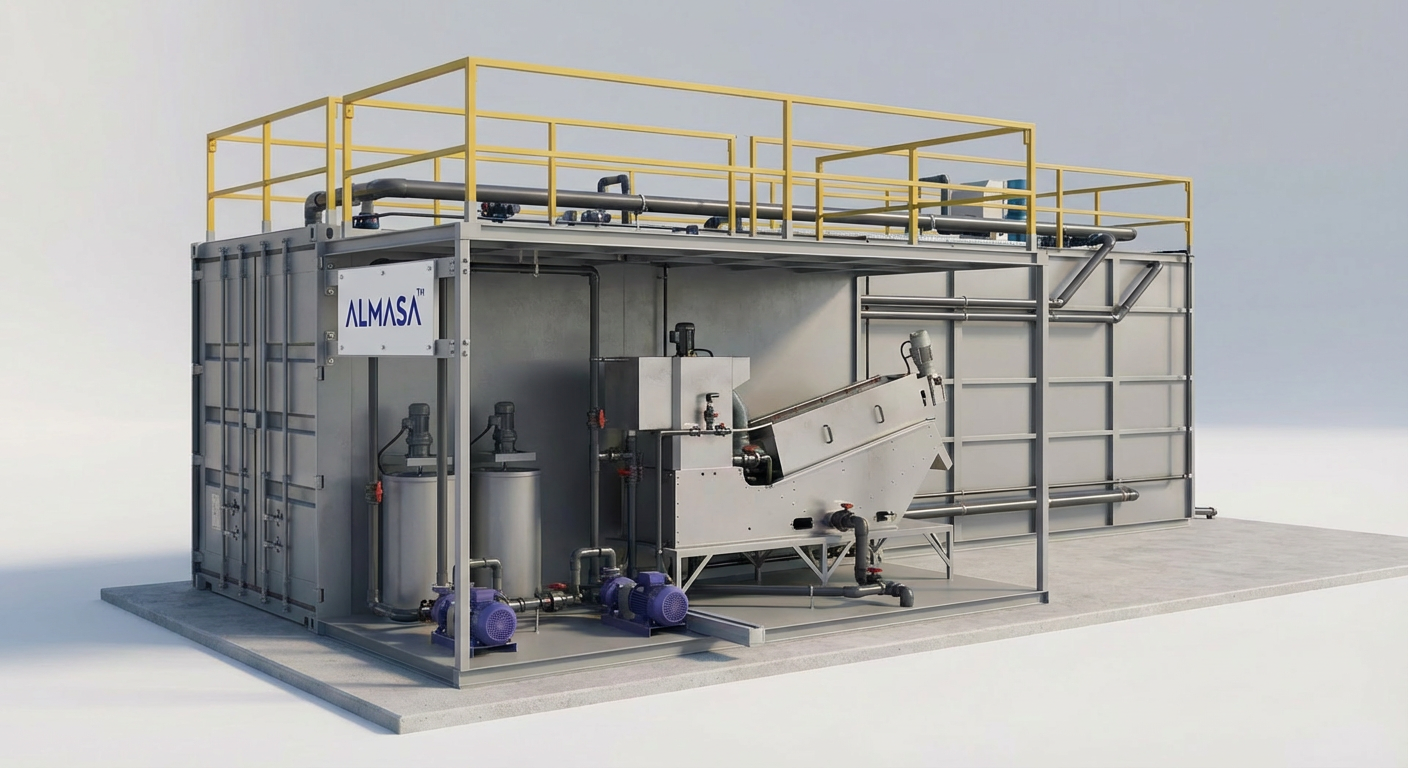
Almasa KSA provides customized wastewater treatment solutions for labour camps, worker accommodations, industrial facilities, and infrastructure projects across Saudi Arabia.
Our expertise includes:
- Sewage Treatment Plants (STP)
- MBR Technology
- Greywater Treatment Systems
- Water Reuse Solutions
- Operation & Maintenance Services
Why clients trust Almasa:
- 600+ GCC projects completed
- Advanced membrane expertise
- Strong technical support
- Fast response times
- Customized engineering solutions
- Sustainability-focused designs
Our team helps project owners select wastewater treatment systems designed for long-term reliability and performance.
Conclusion
Choosing the right labour camp STP Saudi Arabia solution requires more than simply comparing equipment prices.
Factors such as capacity, technology selection, water reuse opportunities, environmental conditions, and long-term support all play a critical role in project success.
By avoiding these common mistakes, project owners can improve wastewater treatment performance, reduce operational costs, and support sustainable camp operations for years to come.