

Food and beverage production creates wastewater that can change significantly from one shift, recipe or cleaning cycle to the next. Milk, sugar, starch, proteins, cooking oils, product losses and cleaning chemicals may all enter the drain. A suitable ETP for food industry Saudi Arabia projects must therefore be designed around actual factory data not a generic flow estimate or a standard domestic sewage package.
For Saudi factories, reliable treatment can reduce environmental risk, tanker disposal, freshwater demand and unplanned production interruptions. It can also create opportunities to reuse treated water for approved non potable purposes. The correct process depends on the wastewater characteristics, discharge or reuse objective, site constraints and requirements imposed by the relevant authority and environmental permit.
Why food-factory wastewater needs specialist treatment
Food wastewater is usually biodegradable, but “biodegradable” does not mean easy to manage. A sudden product spill can sharply increase the organic load. Hot wash water, sanitizers or caustic cleaning solutions can change the temperature and pH. Fats, oils and grease may cool and accumulate in pipes, while suspended food particles can block screens and overload downstream equipment.
The main parameters normally investigated are:
- BOD: oxygen required by microorganisms to break down biodegradable matter.
- COD: a broader indicator of oxidizable contamination and rapid load changes.
- TSS: suspended solids such as fibres, grains, pulp and food particles.
- FOG: fats, oils and grease that can cause blockages, scum and biological process problems.
- pH and temperature: important for biological stability and equipment selection.
- Nutrients, salinity and cleaning chemicals: relevant to treatment performance and the intended reuse route.
Dairies may release milk solids, whey, fats and cleaning in place wastewater. Beverage plants often generate sugar rich product losses, bottle washing water and variable pH. Commercial kitchens and ready meal factories can produce high FOG and solids. Slaughterhouse or meat processing streams may add proteins, blood, fats and higher pathogen risk. These streams should not be assumed to behave identically.
ETP for food industry Saudi Arabia: 7 proven stages
An engineered food factory wastewater treatment system commonly combines several stages. The final arrangement must be selected after sampling and treatability review.
1. Source control and segregation
Good treatment begins inside the factory. Dry-cleaning floors before washing, recovering spilled product, maintaining grease traps and separating concentrated or unsuitable chemical streams can reduce the ETP load. Stormwater and relatively clean cooling water should not be mixed with process wastewater without a clear reason.
2. Screening and solids removal
Coarse and fine screens capture labels, packaging fragments, food particles and fibres before they damage pumps or consume tank volume. Screen size and cleaning method should match the material encountered and the plant’s staffing level.
3. Equalization and pH control
An equalization tank blends peaks in flow, BOD, COD, temperature and pH. Mixing prevents solids from settling and wastewater from turning septic. Online pH monitoring and controlled dosing may be required, but the tank must also have enough working volume to absorb cleaning cycle and production peaks.
4. FOG and suspended solids separation
A dissolved air flotation (DAF) unit is often suitable where wastewater contains emulsified fats and light solids. Coagulant and polymer dosing may improve separation after jar testing. The resulting float sludge must be collected, stored and removed safely; DAF is not a substitute for a sludge management plan.
5. Biological treatment
Aerobic treatment reduces biodegradable BOD and COD. Depending on loads, footprint, effluent target and operating capability, the process may use activated sludge, MBBR or MBR technology. High strength wastewater may justify anaerobic pretreatment, but this requires project specific technical and commercial evaluation.
6. Filtration and polishing
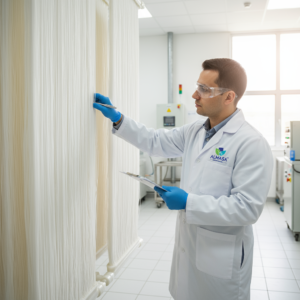
Sand, multimedia or membrane filtration can reduce remaining suspended matter. MBR combines biological treatment with membrane separation and can provide consistently low turbidity in a compact footprint, supporting reuse where the complete water quality requirements are met.
7. Disinfection and treated water management
UV, chlorination or another validated method may be needed according to the reuse or discharge objective. Disinfection performance depends on upstream water quality. Treated water tanks, residual control, distribution pumps and measures preventing cross connections are part of the system not afterthoughts.
Information required to design the ETP
A defensible design starts with representative data. A single grab sample taken during a quiet hour is rarely enough. Designers should understand average and peak production, cleaning schedules and seasonal product changes.
Provide the following:
| Design input | Information needed |
|---|---|
| Flow | Average, peak hour and maximum daily flow |
| Laboratory results | BOD, COD, TSS, FOG, pH, temperature, nutrients and salinity as relevant |
| Production | Products, capacity, shifts and planned expansion |
| Cleaning | CIP chemicals, concentrations, frequency and discharge timing |
| Site | Available area, levels, utilities, access and odour sensitivity |
| Output | Discharge point, intended reuse and applicable approval requirements |
| Operations | Staffing, automation preference, sludge route and maintenance capability |
Water reuse and lifecycle value
Possible uses may include approved landscape irrigation, floor washing, toilet flushing or selected industrial duties. Suitability cannot be decided by appearance alone. The intended use determines the treatment barriers, testing programme, storage design and distribution controls required under Saudi rules and the facility’s permit.
The lowest purchase price is not always the lowest lifecycle cost. Compare energy demand, chemical consumption, sludge production, membrane or media replacement, operator time, spare parts, laboratory testing and disposal charges. Source reduction and stable automation can often produce better returns than oversizing equipment to compensate for poor factory practices.
Common design mistakes
- Sizing only by cubic metres per day while ignoring peak organic load.
- Using one non-representative sample.
- Sending concentrated chemicals or product dumps directly to biology.
- Installing DAF without sludge storage and removal arrangements.
- Promising reuse before confirming the required water quality and approvals.
- Omitting standby equipment, alarms, sampling points or operator training.
- Failing to reserve capacity for production growth.
Why work with Almasa KSA?
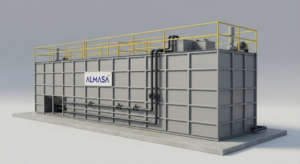
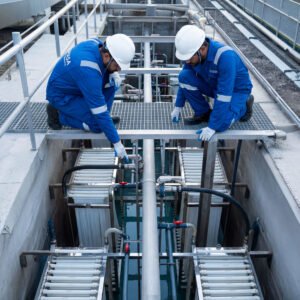
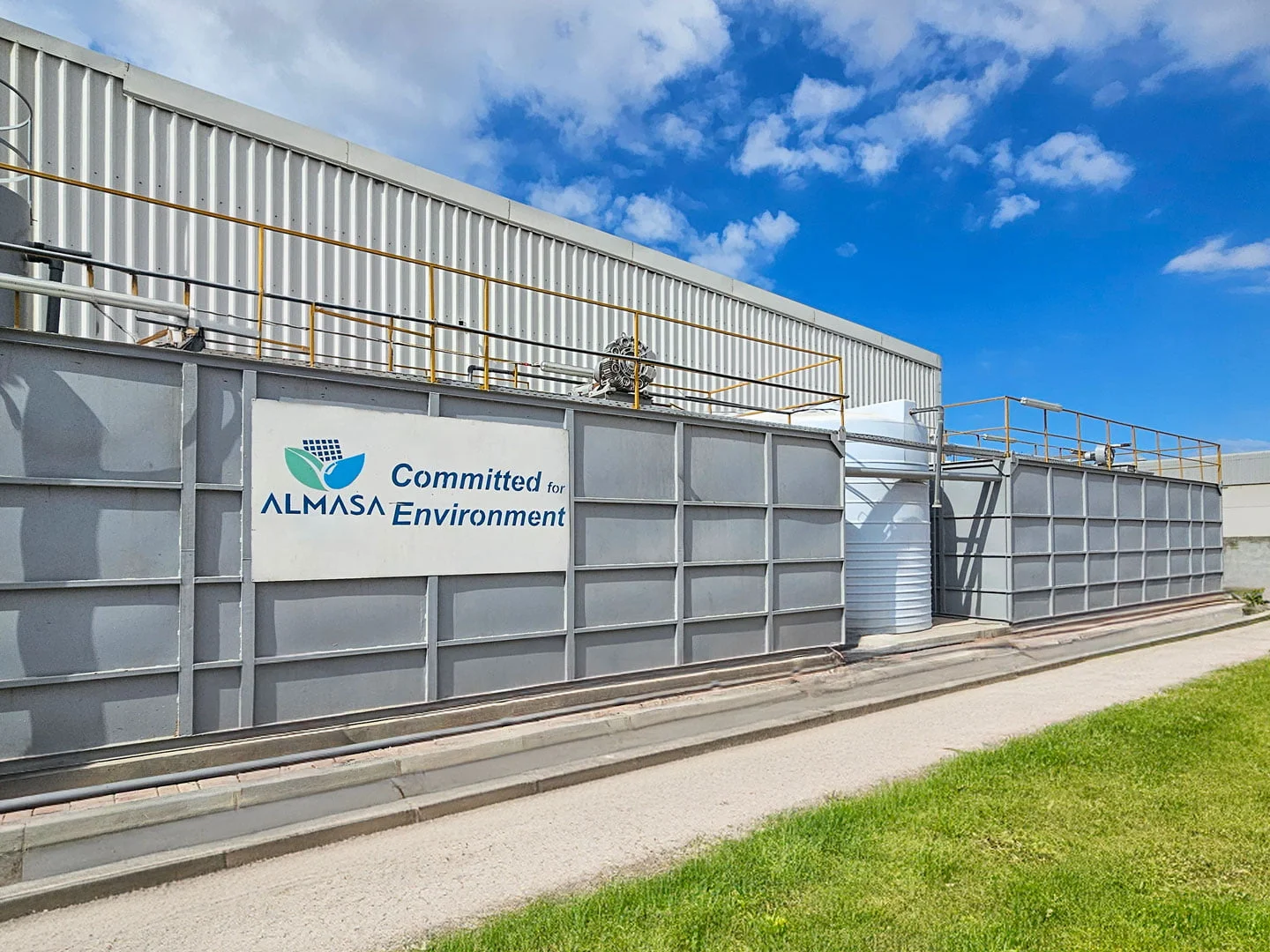
Almasa KSA approaches industrial wastewater treatment as a customized engineering project. The team can review wastewater data, select appropriate pretreatment and biological stages, evaluate MBR-based polishing and plan operation, maintenance and future upgrades. Local technical support and Almasa’s Monyin® hollow fibre MBR expertise help factories address performance over the complete system lifecycle.
Practical project enquiry checklist
Before requesting a proposal, prepare a process description, site layout, three to seven days of representative flow information where possible, laboratory reports, cleaning chemical details, discharge or reuse objective, available power, project schedule and photographs of the proposed location. Also identify planned capacity increases and the person responsible for operating the plant.