

7 Essential Labour Camp STP in Saudi Arabia Requirements
Labour camps play a critical role in supporting Saudi Arabia’s rapidly growing construction, infrastructure, industrial, and energy sectors. From large-scale developments to remote project sites, worker accommodations require reliable wastewater treatment systems to ensure environmental compliance, operational efficiency, and worker well-being.
As labour camp populations continue to increase across the Kingdom, proper wastewater management has become a key project requirement. A well-designed labour camp STP in Saudi Arabia solution not only treats wastewater effectively but also supports water reuse, sustainability goals, and long-term operational cost savings.
In this article, we explore the essential wastewater treatment requirements for labour camp STP in Saudi Arabia and explain how selecting the right sewage treatment plant can help project owners achieve compliance and operational success.
Why Labour Camps Need Dedicated STP Systems
Labour camps generate significant volumes of domestic wastewater every day through:
- Toilets
- Showers
- Wash basins
- Laundry facilities
- Dining and kitchen areas
Without proper treatment, wastewater can create:
- Environmental risks
- Health concerns
- Odor problems
- Regulatory non-compliance
- Increased operational costs
A dedicated sewage treatment plant ensures wastewater is treated safely before discharge or reuse.
1. Compliance with Environmental Standards
One of the most important labour camp wastewater treatment requirements is compliance with applicable environmental standards.
Modern labour camp STP systems must be capable of achieving:
- Reduced Biological Oxygen Demand (BOD)
- Reduced Chemical Oxygen Demand (COD)
- Low Total Suspended Solids (TSS)
- Improved pathogen reduction
Proper treatment helps project operators maintain environmental responsibility while reducing compliance risks.
2. Ability to Handle Population Fluctuations
Labour camp occupancy often changes throughout a project lifecycle.
For example:
- Construction peaks
- Workforce expansion
- Seasonal labour variations
- Project mobilization phases
The selected STP system should be capable of handling variable hydraulic and organic loading without compromising treatment performance.
This is one reason why advanced technologies such as MBR are increasingly used in labour camp applications.
3. Compact Design for Limited Space
Many labour camps operate within restricted site footprints.
Large conventional treatment systems may require significant space and civil construction.
Compact technologies offer advantages including:
- Smaller installation footprint
- Easier integration
- Reduced civil works
- Faster deployment
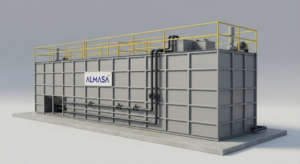
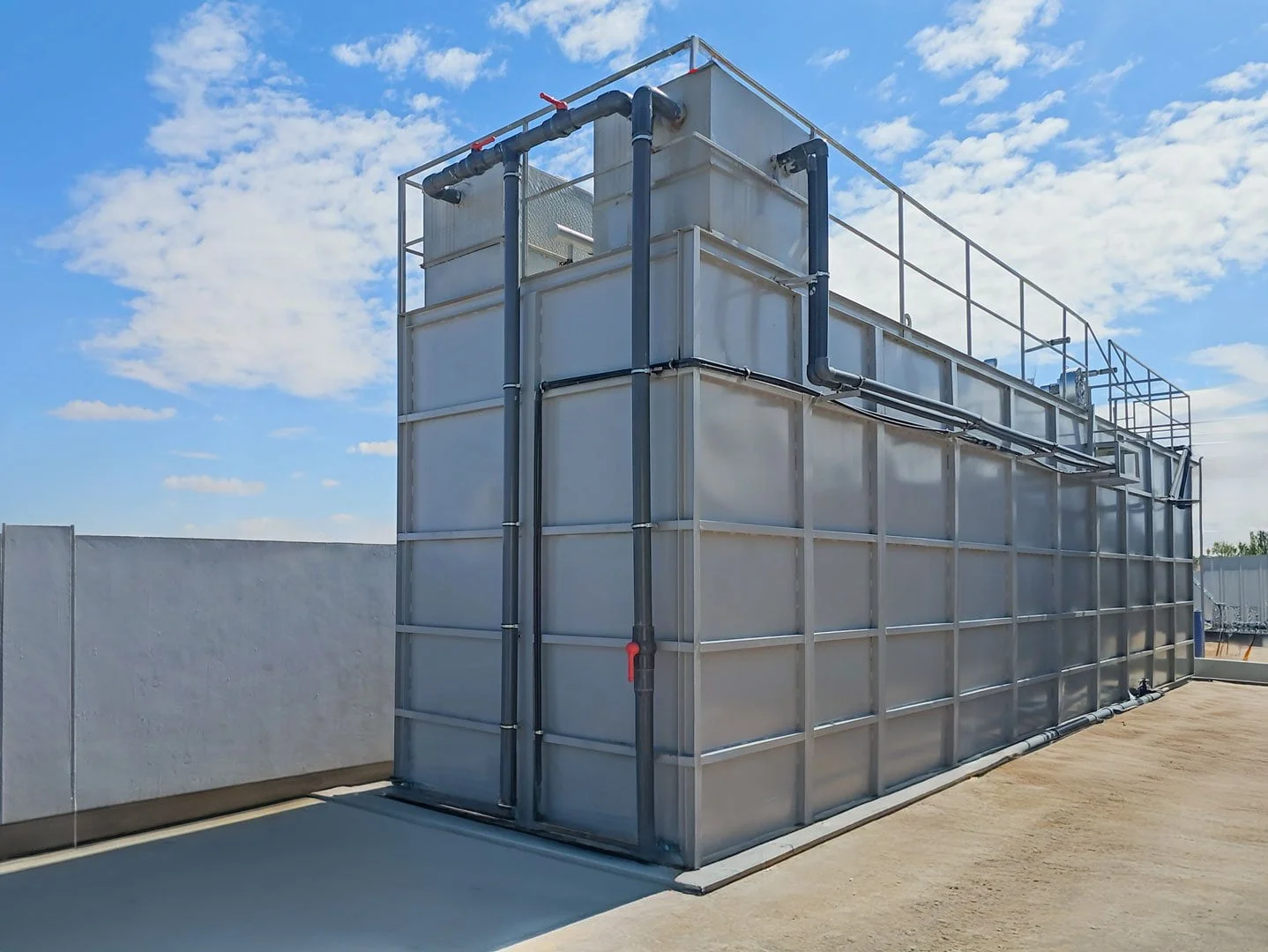
For temporary and remote camps, compact packaged STP systems are often preferred.
4. Water Reuse Capability
Water conservation is becoming increasingly important across Saudi Arabia.
Modern labour camp STP systems can support treated water reuse for:
- Landscape irrigation
- Dust suppression
- Toilet flushing
- Utility applications
Water reuse helps reduce:
- Freshwater consumption
- Water tanker dependency
- Operational costs
This creates both environmental and financial benefits.
5. Odor Control and Worker Comfort
Poor wastewater treatment often results in unpleasant odors that affect worker accommodations.
An effective labour camp STP system should include:
- Proper aeration
- Controlled sludge management
- Reliable biological treatment
- Efficient treatment processes
Good odor control contributes to healthier and more comfortable living conditions.
6. Reliability in Harsh Saudi Conditions
Saudi Arabia’s environmental conditions create unique challenges for wastewater treatment systems.
Factors include:
- High ambient temperatures
- Dust exposure
- Remote locations
- Continuous operation requirements
Labour camp STPs must be designed to maintain stable performance under demanding operating conditions.
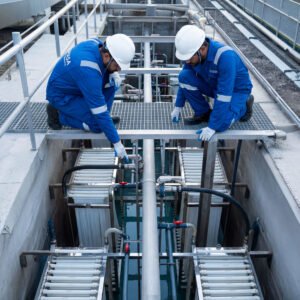
Robust engineering and proper equipment selection are essential for long-term reliability.
7. Efficient Operation and Maintenance
Many labour camps operate with limited technical staff.
Therefore, STP systems should be designed for:
- Simple operation
- Easy maintenance
- Reliable automation
- Reduced downtime
Selecting the right technology can significantly lower long-term operating costs and maintenance requirements.
Which STP Technology Is Best for Labour Camps?
Several wastewater treatment technologies are available for labour camp STP in Saudi Arabia applications.
Conventional Systems
Suitable for some projects but generally require larger footprints and more extensive infrastructure.
MBBR Systems
Offer improved biological treatment efficiency and operational flexibility.
MBR Systems
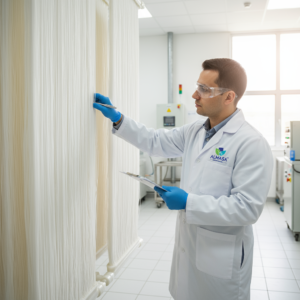
Membrane Bioreactor (MBR) technology is increasingly preferred for labour camps due to:
- Superior treated water quality
- Compact footprint
- Water reuse capability
- Better odor control
- Stable operation under varying loads
For many modern labour camp projects, MBR provides the most effective long-term solution.
Common Labour Camp Applications
Labour camp STP systems are widely used in:
Construction Camps
Temporary accommodations supporting infrastructure and building projects.
Industrial Camps
Worker housing for industrial facilities and manufacturing sites.
Oil & Gas Camps
Remote workforce accommodations requiring reliable wastewater treatment.
Infrastructure Projects
Large-scale developments with temporary or permanent workforce housing.
Mining Camps
Remote operations requiring sustainable wastewater management.
Why Labour Camp Operators Are Investing in Water Reuse
Water tanker costs continue to represent a significant operational expense for many remote camps.
By implementing wastewater treatment and reuse systems, operators can:
- Reduce freshwater demand
- Lower utility expenses
- Improve sustainability
- Support environmental initiatives
As Saudi Arabia continues emphasizing water conservation, water reuse is becoming a key consideration in labour camp design.
Why Choose Almasa KSA?
Almasa KSA provides advanced wastewater treatment solutions for labour camps, construction projects, industrial facilities, and infrastructure developments across Saudi Arabia.
Our expertise includes:
- Sewage Treatment Plants (STP)
- MBR Technology
- Greywater Treatment Systems
- Water Reuse Solutions
- Operation & Maintenance Services
Why clients choose Almasa:
- 600+ GCC projects completed
- Advanced membrane expertise
- Fast technical support
- Customized engineering solutions
- Sustainability-focused designs
- Strong after-sales service
We help clients develop reliable labour camp wastewater treatment systems tailored to Saudi Arabia’s operating conditions.
Conclusion
Selecting the right labour camp STP in Saudi Arabia solution is essential for maintaining compliance, supporting worker welfare, reducing environmental impact, and improving operational efficiency.
Modern labour camps require wastewater treatment systems that can handle variable occupancy, support water reuse, minimize odors, and perform reliably in demanding conditions.
For project owners seeking long-term performance and sustainability, investing in the right STP technology is a critical step toward successful camp management.