

Why Labour Camps in Saudi Arabia Need MBR Sewage Treatment Plants
Introduction
Labour camps in Saudi Arabia face increasing pressure to manage wastewater efficiently while maintaining environmental compliance, hygiene, and operational efficiency. Traditional sewage systems often struggle with fluctuating wastewater loads, odor problems, limited space, and rising water costs.
This is why many developers, contractors, and facility operators are now shifting toward MBR sewage treatment plants for labour camp wastewater treatment in Saudi Arabia.
MBR (Membrane Bioreactor) technology offers superior treatment quality, compact design, water reuse capability, and long-term operational reliability — making it one of the most effective wastewater solutions for labour accommodations across the Kingdom.
As a leading wastewater treatment company serving the GCC region, Almasa KSA provides advanced MBR STP solutions designed specifically for Saudi Arabia’s demanding environmental and operational conditions.
What Makes Labour Camp Wastewater Treatment Challenging in Saudi Arabia?
Labour camps generate large amounts of domestic wastewater every day from:
- Toilets
- Showers
- Laundry
- Kitchens
- Dining facilities
In Saudi Arabia, these challenges become more critical due to:
- Extreme temperatures
- Remote project locations
- Limited water availability
- Strict environmental standards
- High occupancy variations
Without proper wastewater treatment, camps may face:
- foul odors
- environmental violations
- tanker dependency
- hygiene risks
- rising operational costs
This is where modern MBR sewage treatment plants provide a major advantage.
What Is an MBR Sewage Treatment Plant?
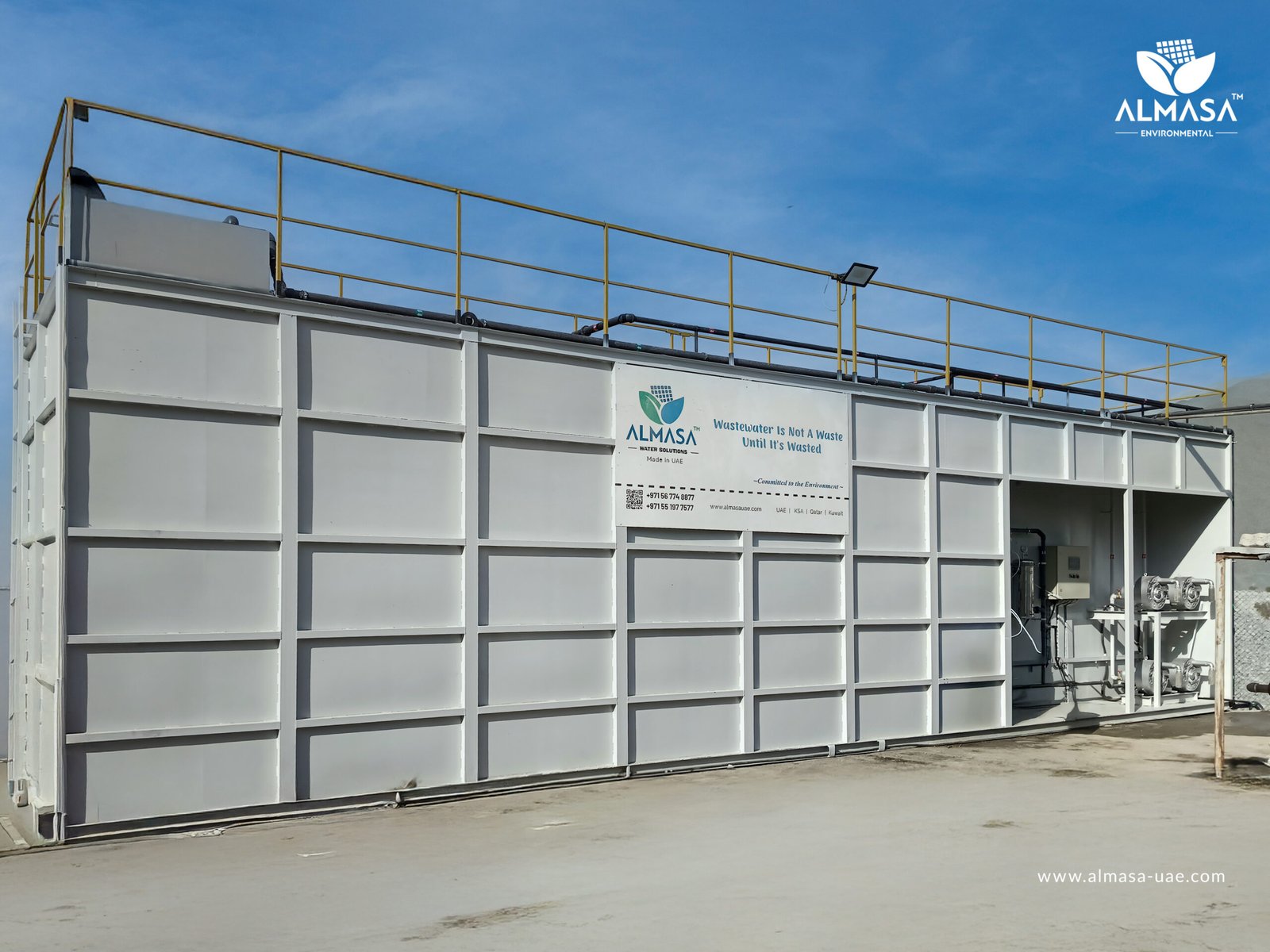
An MBR sewage treatment plant combines biological wastewater treatment with advanced membrane filtration technology.
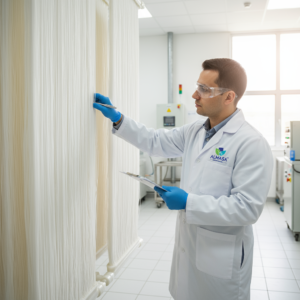
Unlike conventional STP systems, MBR technology uses hollow fiber membranes to produce much cleaner treated water with:
- lower suspended solids
- better BOD/COD reduction
- reduced pathogens
- superior water clarity
Almasa KSA specializes in advanced MBR technology using high-performance Monyin® Hollow Fiber Membranes manufactured with strong GCC engineering expertise.
7 Reasons Why MBR STP Systems Are Ideal for Labour Camps
1. Superior Treated Water Quality
MBR systems produce high-quality treated water suitable for:
- flushing
- irrigation
- landscaping
- utility reuse
This helps labour camps significantly reduce freshwater consumption.
For Saudi Arabia, where water conservation is becoming increasingly important, wastewater reuse offers major long-term benefits.
2. Compact Design Saves Valuable Space
Labour camps often have limited installation space.
Compared to conventional systems, MBR plants require:
- smaller footprint
- compact tank arrangements
- reduced civil requirements
This makes them ideal for:
- temporary camps
- modular accommodations
- construction camps
- remote project facilities
3. Better Odor Control
Odor complaints are common in labour accommodations using outdated wastewater systems.
MBR technology helps reduce:
- sludge accumulation
- untreated wastewater exposure
- septic odors
This creates a healthier and more comfortable environment for workers.
4. Handles Variable Occupancy Efficiently
Labour camp populations often fluctuate based on project activity.
MBR systems are more stable during:
- peak occupancy
- sudden load changes
- seasonal worker variations
This operational flexibility is extremely important for Saudi construction and infrastructure projects.
5. Lower Tanker Water Dependency
Water tanker costs in remote Saudi locations can become expensive.
By reusing treated wastewater for irrigation and utility purposes, camps can reduce:
- freshwater demand
- tanker transportation costs
- operational expenses
This improves long-term project sustainability and ROI.
6. Easier Environmental Compliance
Saudi Arabia is increasingly focused on environmental sustainability and wastewater management.
Modern MBR STP systems help camps meet stricter discharge and reuse standards while supporting sustainability goals aligned with Vision 2030 initiatives.
7. Long-Term Reliability and Lower Lifecycle Costs
Although MBR systems may involve higher initial investment compared to conventional systems, they often provide:
- lower operational issues
- better treatment consistency
- reduced maintenance risks
- improved reuse capability
This results in stronger long-term value.
Why Choose Almasa KSA for Labour Camp STP Projects?
Almasa KSA provides complete wastewater treatment solutions tailored for Saudi project requirements.
Key strengths include:
- advanced MBR expertise
- GCC project experience
- local engineering support
- fast technical response
- customized STP solutions
- strong after-sales service
- sustainability-focused systems
With over 600+ GCC projects and strong specialization in membrane technology, Almasa delivers reliable wastewater treatment systems built for harsh regional conditions.
Applications of Labour Camp MBR Systems
MBR sewage treatment plants are widely used in:
- construction camps
- oil & gas camps
- worker accommodations
- industrial camps
- infrastructure projects
- temporary housing facilities
- remote workforce accommodations
Future of Labour Camp Wastewater Treatment in Saudi Arabia
Saudi Arabia’s rapid infrastructure growth is increasing demand for smarter and more sustainable wastewater solutions.
As environmental regulations continue evolving, labour camps will increasingly require:
- water reuse capability
- energy-efficient systems
- compact treatment technologies
- reliable long-term operation
MBR technology is expected to become one of the leading wastewater treatment solutions for modern labour accommodations across the Kingdom.
Conclusion
Choosing the right sewage treatment system is critical for labour camp efficiency, hygiene, sustainability, and operational cost control.
MBR sewage treatment plants offer major advantages over traditional systems by providing:
- superior treatment quality
- compact design
- water reuse opportunities
- better odor control
- long-term reliability
For contractors, developers, and facility operators in Saudi Arabia, investing in advanced labour camp wastewater treatment solutions can significantly improve operational performance while supporting environmental sustainability goals.